
What Happens To License Plates
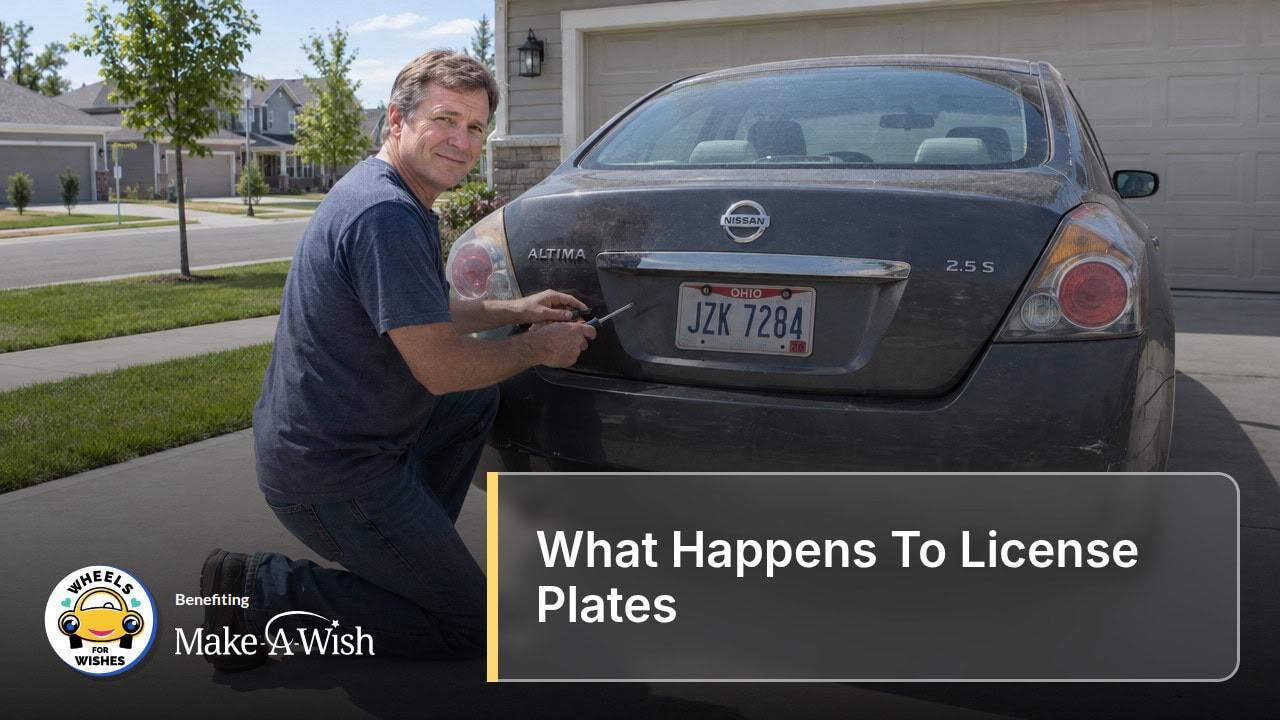
When you donate a car to Wheels For Wishes, what happens to your license plates depends on the state where the vehicle is registered. In some states the plates belong to you and come off before pickup, in others they stay with the vehicle, and in a number of states you turn them in to the state.
Call 1-855-278-9474 or fill out our vehicle donation form to get started today.
- Free towing: We come to you, anywhere in the U.S.
- Great tax deduction: Fully registered IRS 501(c)(3) nonprofit.
- Convenient donation process: Our team guides you through every step.
- Most vehicles accepted: Running or not, case-by-case basis.
Current as of October 2026: the plate rules below reflect each state's law and motor vehicle agency guidance as of that date.
Why Your Plates Matter When You Donate

A plate that is still registered to you after the car is gone can keep your name attached to tolls, parking tickets, and other violations. Taking care of it is usually quick, but the right move changes from state to state, and a few states treat standard plates differently from personalized ones.
Find your state below, then ask our team to confirm the details when you schedule your pickup. Our representatives can answer questions about license plates, titles, and the rest of the donation process.
The Three Plate Rules at a Glance

- The plates belong to you: Take them off before pickup, then keep them, move them to another vehicle you own, or recycle them.
- The plates stay with the vehicle: Standard plates generally stay on the car, with exceptions for personalized and special plates.
- The plates go back to the state: Take them off and turn them in, unless you are moving them to another vehicle you own.
States Where the Plates Belong to You
In these states the plates are registered to you rather than to the car, so they come off before the tow truck arrives. Most of these states do not require you to mail them in, which leaves you free to keep them, move them to another vehicle you own, or recycle them.
This group covers Alabama, Arizona, Arkansas, Colorado, Connecticut, Georgia, Idaho, Illinois, Indiana, Kansas, Kentucky, Massachusetts, Michigan, Missouri, Montana, Nebraska, New Hampshire, North Dakota, Ohio, Oklahoma, South Dakota, Tennessee, Vermont, Washington, West Virginia, Wisconsin, and Wyoming. A few of them add a step or two, covered below.
Colorado: Plates Come Off Before Pickup
Colorado puts the responsibility on the seller to take the plates off before the vehicle changes hands, and leaving them on can make you liable for the next driver's tolls and tickets. Regular plates can go to a county motor vehicle office or a metal recycler, and you can file your release of liability online through the state's myDMV site.
Connecticut and Massachusetts: Take Plates Off, Then End the Registration
Both states ask you to cancel your registration after your car is picked up. Connecticut's DMV does not require the physical plates back, and cancelling online, by mail, or in person is free, which also takes the vehicle off your town's tax list.
In Massachusetts you cancel online, or in person if the vehicle has two owners, and once the cancellation is complete you recycle or destroy the plates. In both states, wait to cancel your insurance until the registration cancellation is finished.
Georgia: Plates Come Off and Stay With You

Georgia plates do not transfer with the vehicle to its next owner. You can keep yours, move them to another vehicle, or surrender them to the Department of Revenue for cancellation, and the state advises cancelling your registration online before you cancel your insurance.
Kentucky: Plates Follow the Owner Since 2024
Since January 2024, Kentucky owners keep both their plate and any unexpired registration when they transfer a vehicle. Take your plate off before pickup, and be aware that older guides saying Kentucky plates stay with the car are out of date.
Nebraska: Plates Come Off, a Refund Requires Returning Them
Nebraska plates come off before pickup. If you want a refund for the unused portion of your registration, bring the plates, decals, and registration to your county treasurer with a refund application, and ask the office for its current deadline.
Oklahoma: Plates Follow the Owner Since 2019
Since July 1, 2019, Oklahoma plates have been registered to the owner rather than the vehicle. Take your plate off before pickup, and you can move it to a newly acquired vehicle of the same classification for a fee.
Vermont: Remove Plates, Mailing Them In Is Optional
Vermont's DMV says you are not required to return your plates, though you can mail them in if you would rather not keep them. Whatever you decide, do not leave them on the car.
Washington: Remove Plates and Report the Sale
Washington plates stay with you, and you can move them to another vehicle of the same type or turn them in. The state also wants a report of sale filed within five business days, and that applies when a vehicle is donated or gifted.
West Virginia: Keep Your Plates and Notify the DMV
State law has the original owner keep the plates and notify the DMV right away that the vehicle has been transferred. The plates can go on another vehicle of the same class, and the DMV's Sold Vehicle Notice handles the notification.
Wisconsin: Remove Plates, Don't Mail Them to the DMV
Wisconsin tells sellers to remove the plates from autos and light trucks of 8,000 pounds or under and not to return them to the DMV. Plates stay on the vehicle for trailers, mopeds, mobile homes, trucks registered at 10,000 pounds or more, and farm trucks registered at 16,000 pounds or more. Private sellers also complete the state's online seller notification within 30 days.
States Where the Plates Stay With the Vehicle

In these states, standard plates generally ride along with the vehicle when ownership changes, so leaving them on is the normal or accepted approach. Personalized and special plates are the usual exception, and a few states let you choose.
This group covers Alaska, California, Delaware, Hawaii, Minnesota, Oregon, and Texas.
Alaska: Standard Plates Stay, Personalized Plates Leave
Standard Alaska plates stay on the vehicle. Personalized and specialty plates come off at the time of sale, and the new owner is issued a replacement set at no charge. Report the transfer to the DMV within 10 days online, by email, or with the notice at the bottom of the title.
California: Standard Plates Stay, Special Plates Belong to You
Standard sequential plates remain with the vehicle when ownership transfers, while personalized and special-interest plates belong to the plate owner and should come off before the new owner takes possession. File a Notice of Transfer and Release of Liability with the DMV within five calendar days, since the notice applies to donated vehicles as well as sold ones.
Delaware: Retain Your Plate Number Before Pickup
In Delaware the plate number goes with the vehicle unless you retain it before the transfer. To keep your number, take your title to a DMV office and place the plate in retention, which lets you move it to another vehicle you own, hold it for a future vehicle, or give it to someone else.
Hawaii: Plates and Registration Generally Stay With the Vehicle
Hawaii plates and registration generally stay with the vehicle, and the county issues the next owner a new registration. File a Notice of Transfer with your county's motor vehicle office within 10 days of pickup.
Minnesota: Standard Plates Stay, Special Plates Need a Decision
Standard Minnesota plates stay with the vehicle, and so does its paid registration. State rules treat personalized and other special plates as assigned to the new owner unless you elect to keep them, so contact Driver and Vehicle Services before pickup if you want to hold on to yours, and report the sale within 10 days.
Oregon: Plates Are Assigned to the Vehicle, but You Can Take Them Off
Oregon plates are assigned to the vehicle, and custom plates stay with it unless you retain them through DMV before the transfer. The DMV's own sale notice points out that taking your plates off is one way to avoid tickets and towing charges after the car is gone, and you can file that notice online, by mail, or in person.
Texas: Leave Them or Take Them, Your Choice
TxDMV gives sellers the option to remove their plates and registration sticker. If you take the plates, you can transfer them to another vehicle of the same classification, keep them for later, or deface the front with permanent black ink or a similar method before disposing of them. Either way, file the Vehicle Transfer Notification within 30 days.
States Where You Turn Your Plates In to the State

In these states, a plate that is not moving to another vehicle you own needs to go back to the state. Where it matters, we note the insurance timing, because several states want the plate in their hands before you cancel your coverage.
- Florida: Surrender the plate at your county tax collector's office, in person or by mail, unless it is moving to a replacement vehicle. Florida can suspend a driver license when a vehicle is sold and the plate is neither surrendered nor transferred within 30 days.
- Iowa: State law has you remove the plates and either send them to a county treasurer or have them assigned to another vehicle within 30 days of the transfer.
- Louisiana: Remove the plates and cancel them with the Office of Motor Vehicles in person, by mail, or online. The plates can be returned or destroyed.
- Maine: State law treats plates as state property. If you will not move them to another vehicle within six months, remove them and send them with your registration certificate to the Secretary of State.
- Maryland: Plates do not go with the vehicle. Return them to an MVA branch, an authorized tag and title service, or a drop box, or mail them in, and wait for confirmation that they arrived before you cancel your insurance.
- Mississippi: Take your plates to your county tax collector, where you receive credit for the unused portion. Mississippi plates cannot be transferred to another vehicle.
- Nevada: Keep the plates, then use them on another vehicle or turn them in for cancellation within 30 days of the sale. File the online Vehicle Resale Notification within five days, and cancel your registration before your insurance.
- New Jersey: Surrender the plates at a Motor Vehicle Commission agency or by mail, unless you are moving them to another vehicle registered in your name in the same class. Keep your receipt, and include a self-addressed stamped envelope if you mail them and want one.
- New Mexico: Within 30 days, take the plates to the MVD to be destroyed or have them assigned to another vehicle of the same class, and file a Notice of Vehicle Sold.
- New York: Surrender the plates to the DMV or transfer them to another vehicle right away, and do it before you cancel your insurance.
- North Carolina: Return the plates at any license plate agency or mail them to the DMV before you cancel your liability insurance, since canceling first can bring a fine.
- Pennsylvania: Return the plates to PennDOT unless you are moving them to another vehicle, which marks the plate as a dead tag on the vehicle record. Return or transfer the plate before you cancel your insurance.
- Rhode Island: Surrender the plates at any DMV branch, at an AAA office if you are a member, or by registered mail to the DMV in Cranston.
- South Carolina: File a Notice of Vehicle Sold (Form 416), complete the License Plate Turn-In (Form 452), and return the plate to any SCDMV branch or by mail. Cancel your insurance last.
- Utah: Remove the plates and, within 20 days, send them to the DMV for destruction or have them assigned to another vehicle.
- Virginia: Surrender the plates promptly at a DMV customer service center or through the DMV's online plate surrender, and wait to cancel your insurance until the plates are surrendered.
- Washington, D.C.: Remove your tags and surrender them to DC DMV in person or by certified mail, and do not cancel your insurance until they are in.
Report the Transfer After Pickup

Taking the plates off is half the job. Many states also want you to report the vehicle as gone, and some set short deadlines that run from the pickup date.
- Within five days: California (five calendar days) and Nevada.
- Within five business days: Washington.
- Within 10 days: Alaska, Arizona, Hawaii, and Minnesota.
- Within 30 days: New Mexico, Texas, and Wisconsin.
- As soon as you can: Illinois, using the Seller's Report of Sale (Form VSD 703).
Other states have their own forms and timelines, so ask our team about yours when you schedule your pickup.
If You Forgot to Remove Your Plates
It happens, and several states have a clean fix. Colorado lets you file a release of liability online, Wisconsin's License Plates Cancellation Application (Form MV2514) includes a "left on vehicle when sold" option, Tennessee's plate cancellation form lists a vehicle donated to charity with the plate attached, and Idaho's cancellation form has a "sold vehicle, plates left on vehicle" choice.
In any other state, contact your motor vehicle agency as soon as you notice. The sooner the plate is cancelled, the sooner tolls and tickets stop pointing back to you.
How to Donate Your Car in Three Steps

- Call 1-855-278-9474 or fill out our online donation form, and we'll confirm whether we can accept your vehicle, evaluated on a case-by-case basis.
- We schedule free towing at a time that works for you, so take your plates off first if your state calls for it.
- After your vehicle sells, we mail your tax-deductible receipt, and proceeds support Make-A-Wish chapters and children's wish and hospital charities across the country.
You can claim this only if you itemize deductions. We can't give tax advice. Talk to your own tax advisor.
State plate rules change from time to time, and this guide was last updated in October 2026. Your state's motor vehicle agency has the final word, and our team can walk you through your state when you call 1-855-278-9474.